
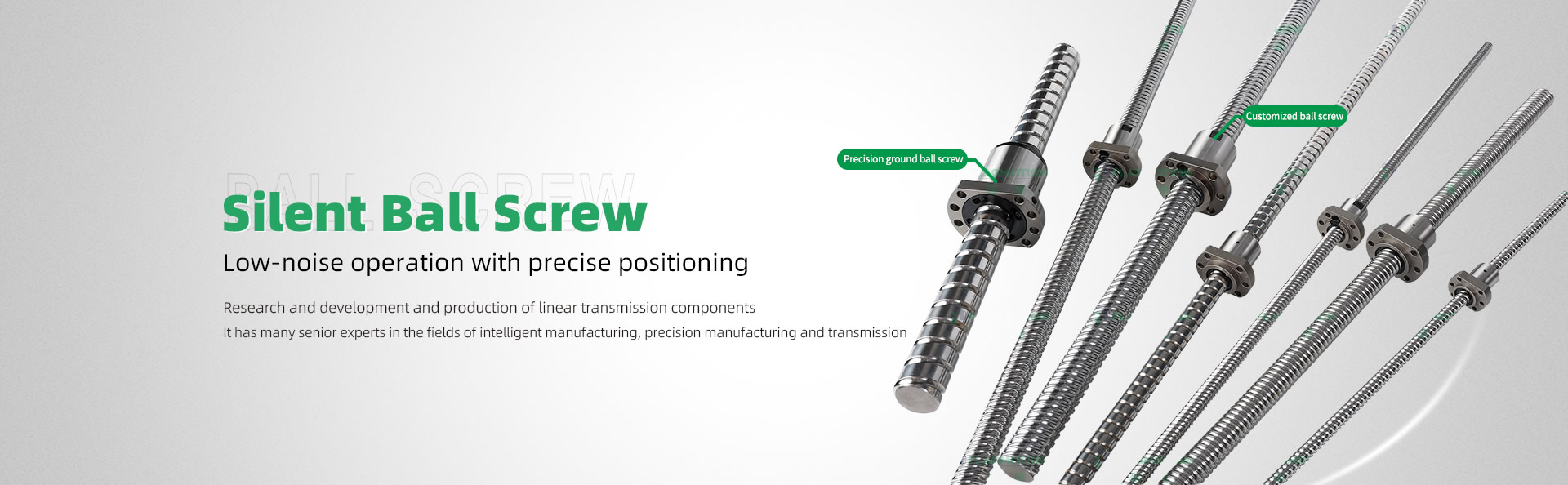
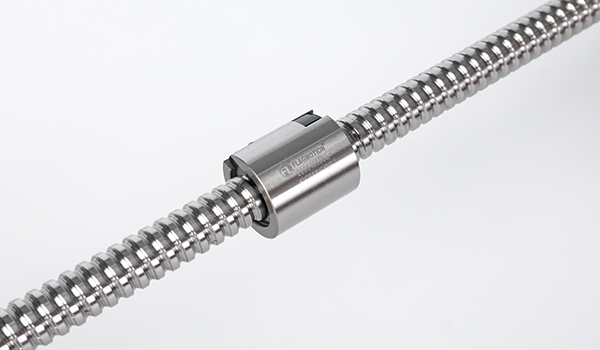
Ball screws play a crucial role in machine tools, but clearance issues often trouble users. So, how do these gaps come about? Then how can it be solved?
1. Insufficient or no preloading: When the lead screw is placed vertically, no preloading will cause the nut to rotate due to its own weight, thus creating a gap. Therefore, the correct preloading amount is of vital importance and must be adjusted properly before shipment.
2. Excessive torsional displacement: Lead screws with an overly large slenderness ratio are prone to sagging due to their own weight. Improper heat treatment can also lead to uneven hardness distribution, thereby causing excessive torsional displacement.
3. Improper selection of bearings: Choosing the right bearings is crucial. For instance, Angle bearings, especially high-pressure Angle bearings, can better withstand axial loads and reduce backlash.
4. Improper installation of bearings: Poor adhesion between the bearing and the lead screw, and poor verticality between the bearing mating surface and the locking nut can all lead to clearance. Ensure verticality and use two lock covers and spring washers to fix the bearing to prevent it from loosening.
When clearance is found in the ball screw, it is crucial to analyze the cause in a timely manner and take the correct treatment measures to ensure the normal operation and use of the equipment. I hope these suggestions can help you solve the problem!



Scan WeChat
Enjoy one-to-one consultation
